
Reaching a milestone always invites
a new question: what comes next?

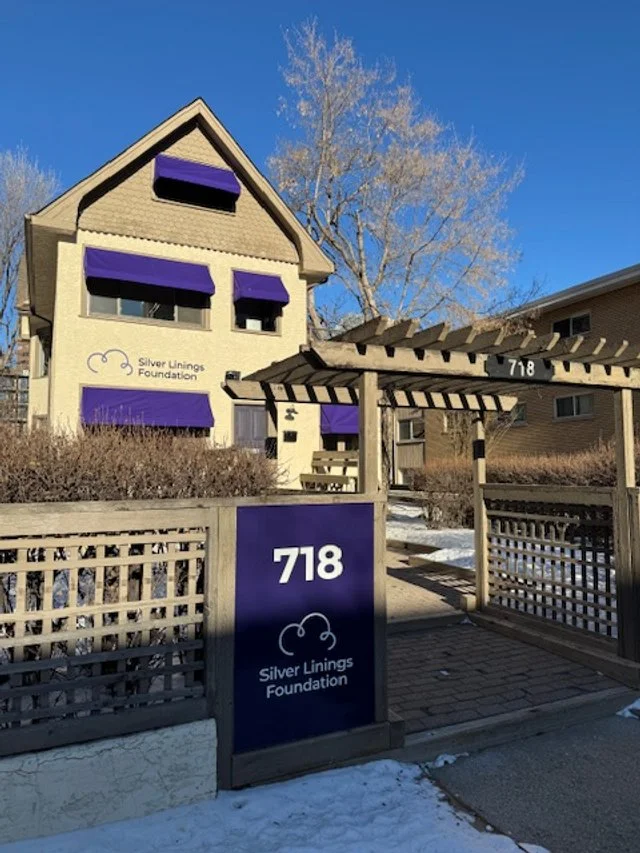
In 2025, Silver Linings Foundation embraced transition, building on the achievement of establishing Alberta’s first live-in treatment centre for eating disorders and turning our focus toward the future of recovery.
Over the past decade, we have grown significantly in both reach and experience. We have seen first hand how broadly eating disorders affect individuals, families and communities and how valuable it is for systems of care to coordinate and work together to provide a continuum of care. Through community needs assessments, partnerships, advocacy, and support for thousands of individuals, we have gained deep insight into the rigorous work of recovery and the hope required to sustain the effort.
Guided by these learnings, we have renewed our mission and vision to reflect the evolving recovery landscape and to shape our next chapter. We are proud to share this refreshed outlook.
To ignite hope and improve recovery outcomes across Alberta by evolving care, expanding access, and increasing understanding of eating disorders.
Our NEW Mission
Albertans affected by eating disorders experience lasting hope and healing through access to exceptional, affordable treatment and community support at every stage of their journey.
Our NEW Vision
These commitments are more than aspirational. Alongside our renewed mission and vision, we have introduced the Continuum of Recovery, a five-pillar framework that represents the key areas where community and recovery intersect, and where we can make our greatest impact. Together, these pillars put our mission into action.
Our Continuum of Recovery
Learn how each pillar drives impact,
and what we achieved this year.
PREVENTION & EARLY INTERVENTION
Shifting the Narrative
Raising awareness about eating disorders is key to reducing stigma and building community understanding. Greater public knowledge supports earlier intervention, helping people seek help sooner or support others more effectively. Continued, informed conversations also reduce shame and reinforce that recovery is possible and support is available.
In 2025…
We expanded our presence at community presentations and resource fairs across Calgary. In total, we connected with more than 500 people, and in many cases, we were able to speak with individuals one-on-one. We built and fostered relationships with dozens of other support organizations and institutions that helped amplify our message and reach more people.
Thanks to our generous supporters for making this essential advocacy work possible.

We connected with
500+
new community members
TREATMENT
Responding in Real Time
Accessing eating disorder treatment can be overwhelming, and our role is to help make that path clearer. As a trusted community partner, we bridge individuals to the care they need: providing referrals, informed recommendations, and ongoing guidance. This pillar ensures no one navigates the system alone and that people get the right care at the right time.
FROM A PARENT
of a treatment centre client
“You gave [my daughter] physical safety with healthcare supports and graduated activity, as well as emotional safety. You did this while making her feel valued and supporting her own agency to do the work that she needed to for herself. You gave her dignity back. ”
In 2025…
We launched our Recovery Navigation Clinic, a free program that provides individuals with one-on-one guidance to help map a path to recovery, informed by clinical insight and personalized recommendations. Thanks to The Calgary Foundation, we were able to open the clinic in May, operating one day per week and quickly serving over 100 clients. By September, we expanded to two days per week to meet growing demand.
We continue to foster our partnership with EHN Sandstone at the Live-in Treatment Centre, providing clinical training for staff, offering consultation, and facilitating referrals for program placement. In addition, we connected individuals with public and private treatment options for acute cases and began developing aftercare pathways to support those transitioning from formal treatment back into daily life.
We are grateful to our donors for supporting the treatment work we do. It would not be possible without your help.

In just 8 months,
we were able to provide
100+
1-on-1 sessions, operating only 1-2 days per week
RECOVERY COMMUNITY
Supporting Through Connection
The Recovery Community pillar is about helping people build a support system that assists them at every stage of the recovery journey. We believe connection is fundamental to recovery which is why our groups and workshops are centered around reducing isolation and fostering belonging during the recovery process. Our recovery community is about helping people build resilience, find hope, and reconnect with themselves and others.
PARTICIPANT FEEDBACK
indicate groups/workshops:
Build understanding, insight + recovery skills
Support self-compassion and resilience
Reduce isolation and strengthens connection to recovery-oriented communities
Meet diverse needs through multiple pathways
(clinical, creative, relational, somatic)
In 2025…
We completed a major overhaul of our program offerings in the Fall. Over the summer, our entire Silver Linings team evaluated our existing lineup and reimagined how programs could be delivered to better align with community needs while improving accessibility, effectiveness, and engagement. Thanks to donor funding, it was possible to offer all of our programs at no cost, which helps ensure more people can access meaningful support.
In September, we launched more than 45 revised sessions, and registration exceeded expectations. Within the first week, participation doubled compared to the same period last year and continued to grow throughout the season. Participant feedback has been overwhelmingly positive, confirming that these changes are meeting real needs and supporting recovery in meaningful ways.
Our Recovery Community is thriving because of the generosity of our supporters. Thank you.

Groups & workshops offered
45
of group participants said that
no cost made programs more
accessible to them
81%
of participants said they felt
less alone after attending a group/workshop
77%
FLOURISHING
Thriving Beyond the Disorder
The broader goal of eating disorder recovery goes beyond disorder management, it's about helping people reclaim a full and meaningful life. This pillar seeks to engage individuals after they have achieved strong-recovery and moved into a place where identity, purpose, and joy can take root again. We believe long-term healing is sustained through connection, contribution, and a sense of belonging. The work within this pillar focuses on engaging people in the stages beyond recovery, as their capacity to give back continues to grow. Whether through mentoring, volunteering, or offering their own unique contributions, we support individuals not just in recovering, but in truly thriving.
In 2025…
When people recover, they often discover a new capacity to support others. There is no better example of this than our Peer Mentor Program. Every one of our mentors has walked the path of recovery themselves and understands the depth and complexity of eating disorders. Now in its fourth year, the program continues to thrive and we are very grateful for the generous support we received this year from The Hunter Family Foundation. There is something truly full-circle about individuals who once received support through Silver Linings programs returning as mentors to give that support to others.
Mentees gain tremendous value from the program, and we are just as proud that it gives mentors a meaningful way to stay connected to the recovery community after their own need for direct support has passed.
This fall, we expanded mentor opportunities with our brand new Lived-Experience workshops; sessions co-facilitated by peer mentors and clinicians. Participants deeply valued the real-world insights from mentors with lived recovery experience, and due to their popularity, these workshops will remain part of our regular programming.
This facet of our work, would not be possible without the support we have received from our donors. Thank you.
56
Mentees supported in 2025
27
Mentors
serving in 2025
12
Cities and towns reached
by the program
CAPACITY BUILDING
Thriving Beyond the Disorder
To create lasting change, it is essential to equip others with the knowledge, skills, and resources needed to better understand and support those affected by eating disorders. Our capacity-building efforts focus on educating healthcare professionals, educators, employers, and community leaders about eating disorders and the critical role they can play in prevention, early intervention, and recovery. By expanding the network of informed individuals and organizations, we aim to create a more supportive, responsive environment for individuals with eating disorders in every sector of society.
PARTICIPANT REVIEW
This course was incredibly impactful...it helped me see beyond the disorder—to better recognize the person behind it and understand the profound power of connection in the healing process. I highly recommend this training to clinicians dedicated to providing thoughtful, wraparound care for every client they serve.”
- Claire G. Registered Psychologist
Our organization has always had strong ties to the clinical side of the recovery community, championing research and elevating clinicians through our resources and advocacy work. What was missing was a centralized, accessible curriculum for eating disorder–informed care, particularly outside ED-specialized settings, where many practitioners feel under-informed and hesitant to support patients beyond referral. We recognized the need for a baseline curriculum that empowers any practitioner to understand their role in recovery and provide informed support.
In response, we co-developed Eating Disorder–Informed Care, an 11-hour online continuing education course featuring expert-led content. The course isn’t about becoming a specialist, it’s about understanding the fundamentals so clinicians can identify signs earlier, avoid unintentional harm, and better support clients who may be struggling.
We are deeply grateful for the support of the Change Can’t Wait Grant from the City of Calgary, our partnership with the Lionheart Foundation, and the many contributors who helped bring this curriculum to life. Our goal is simple: to educate as many clinicians as possible and strengthen the care available to those affected by eating disorders.
Collaboration, support and immense generosity made our Capacity Building work possible this year. Thank You.
In 2025…

of participants want more
opportunities like the one
they attended.
82%
ACROSS PROGRAMS & SEASONS
We’re Looking Ahead
Our Commitment to Progress
As we move forward with these five critical areas of focus, we remain deeply committed to the individuals we serve and our on-the ground impact. Our work is only as good as the impact it creates and we think 2025 was an exceptional year for expanding access and removing barriers.
While eating disorder prevalence and risk continues to rise, we also believe that we can help create a world where they are better understood, deeply supported and that nobody has to recover alone.
Thank You to our supporters
The work we do would not be possible without the generosity of our supporters: individual donors, foundation donor-advised funds, granting bodies, and volunteers of all kinds. Your support makes eating disorder recovery possible.
Thank you,
The Silver Linings team & our recovery community.